
NDIS Improved Daily Living (CB Daily Activity): The Ultimate Category 15 Guide
Introduction: The Foundation of Your 2026 NDIS Plan
Navigating the NDIS plan requires a deep understanding of how support categories interact to provide a cohesive disability roadmap. Under the New NDIS Framework Planning 2026, the NDIA has introduced a “person-centred” approach that focuses on your disability support needs rather than just functional impairment. Whether you are self-managed, plan-managed, or NDIA managed, knowing the reasonable necessary criteria is vital for paving your path toward improved daily living.
Understanding the Terminology: Improved Daily Living vs. CB Daily Activity
Navigating Federal Disability Funding requires a clear understanding of NDIS nomenclature. Nurse Aid Australia helps you decode these terms to ensure you maximize your support budget.
The most common point of confusion for an NDIS participant is seeing different names for the same fund. This table clarifies the distinction between your paperwork and the digital portal.
Feature | Improved Daily Living | CB Daily Activity |
Where it appears | Your printed or PDF NDIS Plan | The myplace Portal & PACE System |
Budget Category | Category 15 (Capacity Building) | Category 15 (Capacity Building) |
Primary Goal | Independence Building | Provider claiming and budget tracking |
Example Use | Occupational Therapy assessments | Invoicing for Skill Development Training |
Support Type | Therapeutic Supports | Individual Skill Development |
Why are there two different names for Category 15?
The NDIS uses different terms across various platforms. Improved Daily Living Skills is the descriptive name used during your planning meeting. However, the NDIA uses the code CB Daily Activity within the PACE system and portal for provider claiming. Both terms refer to the same NDIS funding pool dedicated to skill development training.
Is Improved Daily Living a Core or Capacity Building Support?
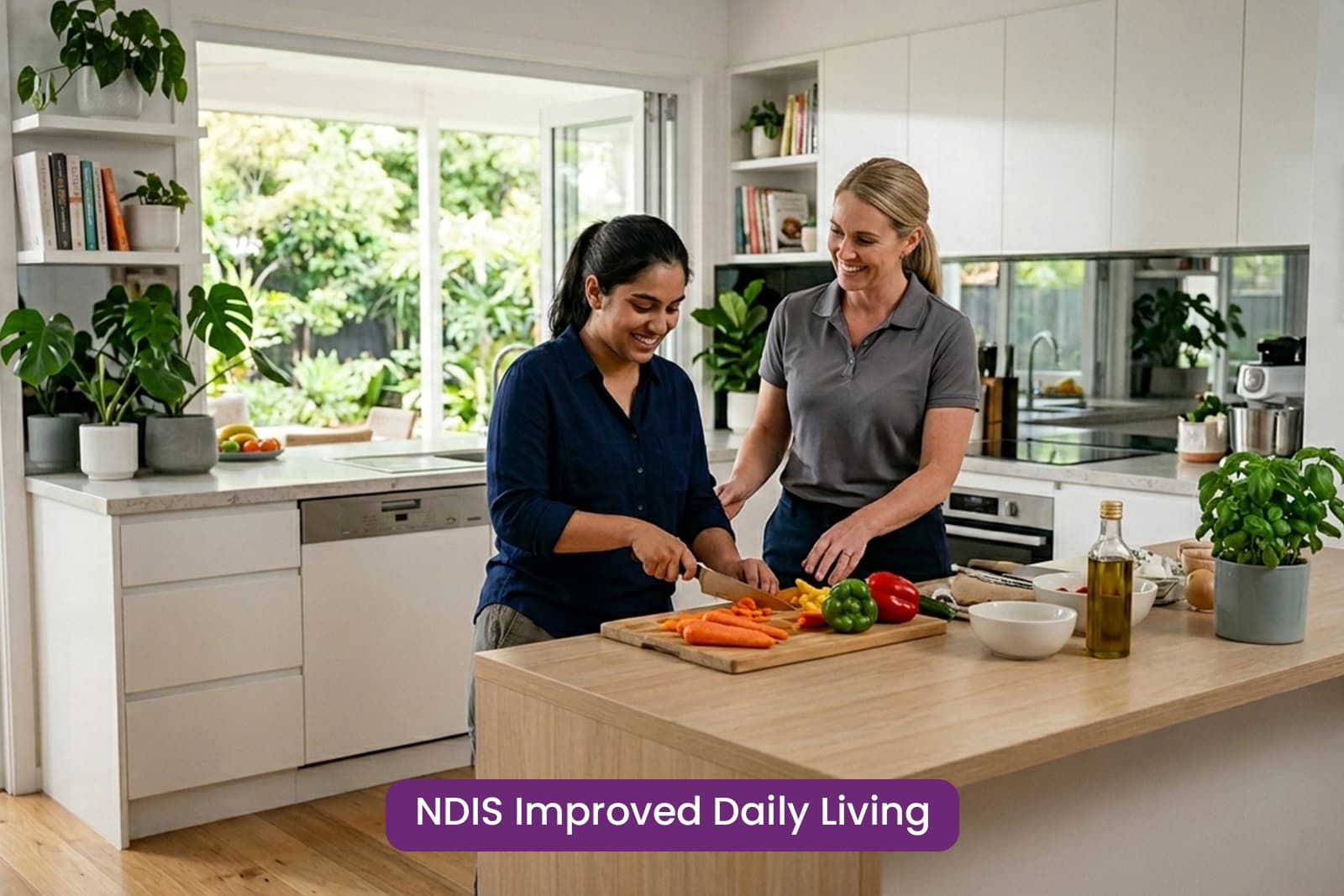
Unlike Core Supports, which provide a support worker to complete tasks for you, Improved Daily Living NDIS is part of the Capacity Building budget. Its purpose is to empower you to achieve your NDIS plan goals by learning how to perform tasks yourself. It is the difference between someone cooking a meal for you and an occupational therapist teaching you how to cook safely.
What Can You Purchase with Improved Daily Living Funding?
What can Improved Daily Living funding be used for NDIS participants often ask? This flexible category covers a wide range of therapeutic supports and allied health professionals.
Functional Capacity Assessments (FCA) and Occupational Therapy
A thorough Functional Capacity Assessment is a key requirement for plan reviews. Occupational therapy under this category focuses on assessing your functional skills and recommending home modifications or assistive technology to make everyday life easier.
Skill Development and Independent Living Training
This funding allows you to engage with specialists to improve daily living skills NDIS outcomes. Whether it is lifestyle skills, financial literacy, or daily routine management, these supports focus on lifelong independence building.
Specialist Nursing Care and Clinical Training
At Nurse Aid Australia, our expertise lies in Clinical Nurse Training. We provide high-quality clinical oversight to teach participants how to handle complex health needs, such as:
- Wound care self-management.
- PEG feeding maintenance.
- Stoma care and continence management.
Therapeutic Supports for Improved Health and Wellbeing
This sub-category includes speech pathology, physiotherapy, and dietetics. These allied health services address neurological, intellectual, or mental health conditions, focusing on improving your physical and social wellbeing.
Examples of "Functional Skills" Development
Developing functional skills is about achieving practical outcomes in various areas of life.
Self-Care and Personal Hygiene Management
This involves skill building in Activities of Daily Living (ADLs). You can use your improved daily living funding to learn how to manage personal care, including dressing, toileting, and grooming with less reliance on others.
Household Tasks: Meal Preparation and Cleaning Skills
Through Instrumental ADLs (IADLs) training, you build the capacity to handle household management. This includes healthy meal preparation, laundry, and maintaining a safe home environment.
Community Participation: Travel Training and Social Confidence
Improved daily living NDIS examples include public transport training. A support worker or specialist helps you navigate the community, increasing your social and community participation.
Health Literacy: Medication Self-Management and Stoma Care
Nurse Aid Australia focuses on clinical skill transfer. We train you to understand your medication schedules and monitor your health markers, ensuring a positive and safe independent lifestyle.
How to Maximize Your Category 15 Budget
Managing NDIS budgets effectively requires strategic planning.
Setting Goals: Aligning Support with Your NDIS Plan
Every item you purchase must align with your NDIS plan goals. Ensure your assessments and reports clearly link therapeutic support to your desired independence outcomes.
Choosing the Right Registered NDIS Provider
Always choose a Registered NDIS Provider like Nurse Aid Australia. We adhere to strict NDIS Commission quality standards, ensuring professional, caring, and effective service delivery.
Tracking Your Spending to Avoid Underspending or Overspending
Regularly check your myplace portal. Underspending your capacity building budget may signal to the NDIA that the support is not necessary, while overspending can leave you without critical support before your next plan review.
Why Choose Nurse Aid Australia for Capacity Building?
Our Clinical Approach to Functional Independence
As a Local South Australian Community provider, Nurse Aid Australia brings a Multidisciplinary approach to disability care. We prioritise clinical expertise, ensuring our nursing team helps you overcome challenging barriers.
Specialized Nursing for Complex Health Needs
We address urgent and ongoing health requirements. By choosing our skilled Registered Nurses, you gain access to personalised clinical training that traditional support providers cannot provide.
Are you ready to build your independence? Contact Nurse Aid Australia today to discuss how we can assist you in achieving your improved daily living goals.
Frequently Asked Questions (FAQ's):
No. Small consumables are sometimes funded, but expensive assistive technology or home modifications usually require Capital Support funding. Category 15 covers the training to use the equipment.
Standard transport (taxis/Ubers) falls under Core Supports. Category 15 funds Travel Training, which is a specific skill development program to teach you how to use public transport independently.
You must provide recent evidence through a Functional Capacity Assessment. This report must describe how further clinical or therapeutic intervention will impact your independence.
Any NDIS participant who has capacity building goals related to independence, social and community participation, or health literacy is eligible. Your LAC or Support Coordinator helps identify if these supports are reasonable and necessary for your individual circumstances.
To increase your funding, you must provide recent evidence to the NDIA. This usually involves a thorough Functional Capacity Assessment from a qualified occupational therapist or a specialized nursing report from Nurse Aid Australia that outlines the necessary clinical intervention required to achieve your plan goals.
The primary difference lies in the outcome:
- Core Supports: Fund a support worker to complete a task for you (e.g., cleaning your home).
- Improved Daily Living: Funds a professional to teach you how to complete the task yourself (e.g., an occupational therapist teaching you household management skills). Unlike Core, you cannot usually move Category 15 funds to other support categories.
Yes. CB Daily Activity is the technical term used in the myplace portal and PACE system for provider claiming. Improved Daily Living is the participant-facing name found in your NDIS plan document. Both refer to Category 15 of your Capacity Building support budget.
- Improved Daily Living NDIS funding covers a wide range of therapeutic supports aimed at independence building. You can allocate this support budget for:
- Functional Capacity Assessments (FCA) and specialized occupational therapy.
- Skill development training for everyday life (cooking, cleaning, budgeting).
- Clinical Nurse Training to manage complex health needs like medication self-management.
- Allied health services including physiotherapy, speech pathology, and dietetics.