
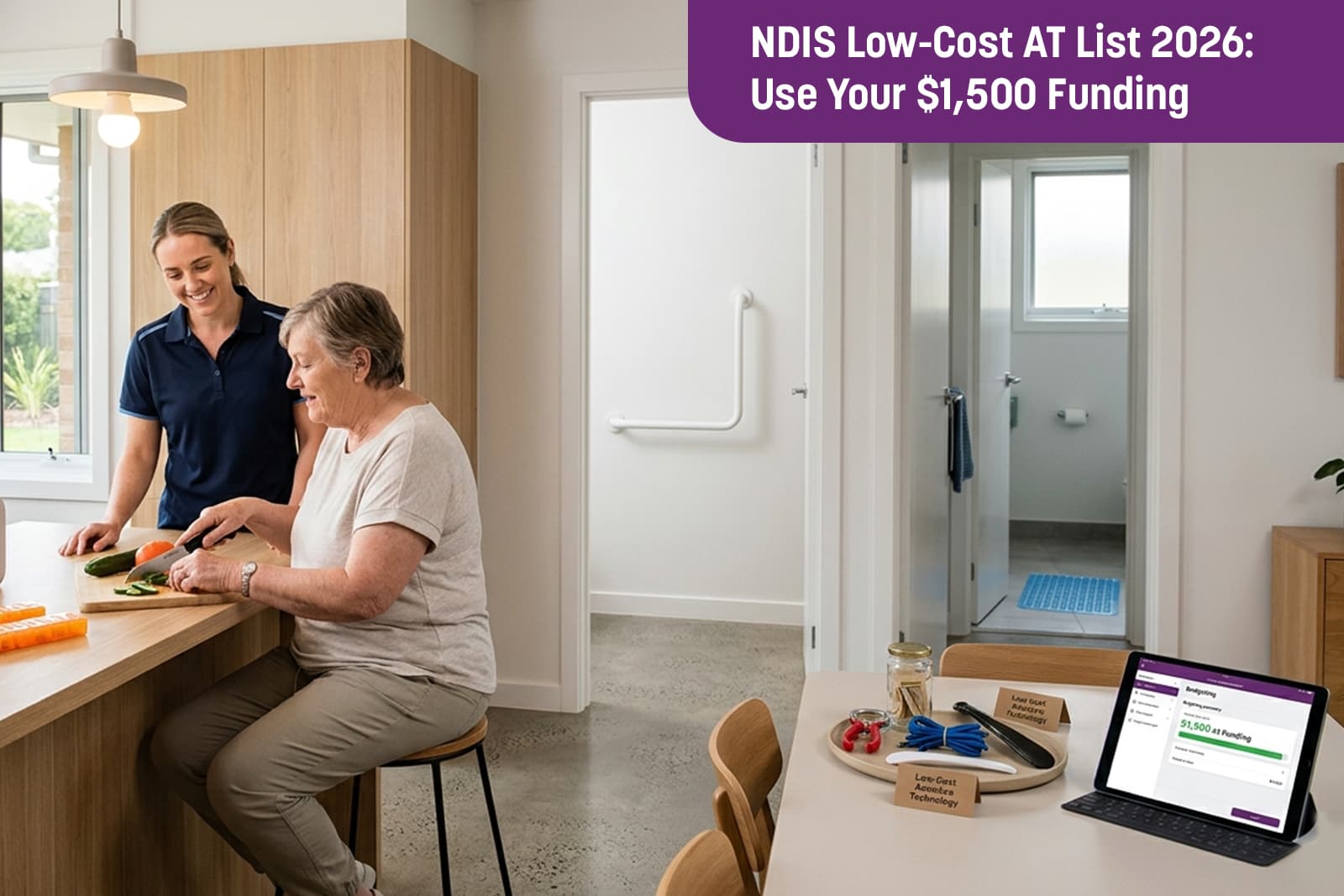
NDIS Low-Cost AT List 2026: 150+ Items Under $1,500 (No Quote Required)
NDIS low-cost assistive technology refers to disability equipment priced under $1,500 that participants can purchase without OT assessments or formal quotes. Under the NDIS Pricing Arrangements 2025-26, these items are classified as low-risk and can be claimed through your Core Consumables (Category 03) or Assistive Technology (Category 05) budget—often with reimbursement in 24-48 hours.
This includes smart home devices, bathroom safety aids, mobility tools, kitchen equipment, and vision aids that help you achieve independence at home. Nurse Aid Australia provides this complete guide to help you identify, purchase, and claim approved items quickly and compliantly.
What is NDIS Low-Cost Assistive Technology in 2026?
In the current NDIS Pricing Arrangements, low-cost assistive technology refers to low-risk AT items with a retail price under $1,500. These are products you can typically buy from standard retail stores or specialist disability providers.
Because they are considered low-risk, they are unlikely to cause harm and are easy to set up without professional help. Funding for these items usually sits within your Consumables budget (Support Category 03) or your Assistive Technology budget (Support Category 05). The NDIS support list ensures that as long as the item is reasonable and necessary, you can use your NDIS funds to gain self-reliance at home.
Read About:- “NDIS Assistive Technology Support Guide | Nurse Aid”
NDIS Low-Cost AT List 2026: Examples of Approved Devices
The Assistive Technology Code Guide lists hundreds of options. To trigger your daily living autonomy, consider these common examples:
1. Smart Home Technology
Smart home devices are high-growth NDIS supported in 2026. These include:
- Voice-activated smart lighting for hands-free control.
- Smart plugs to manage appliances via phone apps.
- Built-in accessibility features on tablets or phones to assist with communication.
2. Kitchen & Dining Aids
Improve your fine motor skills and safety with adaptive kitchen tools NDIS approved, such as:
- Weighted cutlery or easy-grip utensils.
- One-handed jar openers and non-slip cutting boards.
- Modified cups and weighted blankets for sensory regulation during meals.
3. Bathroom Safety
Maintain your in-home safety & mobility with these low-cost AT items:
- Non-slip bathroom safety aids are NDIS funded, like high-quality bath mats.
- Portable shower chairs and toilet seat raisers.
- Long-handled sponges to reduce the need for reaching.
4. Mobility Tools
Simple mobility aids help you stay active:
- Folding walking sticks and quad canes.
- Threshold ramps for easy wheelchair or walker access between rooms.
- Reacher grabbers to pick up everyday items without bending.
5. Vision Aids
For those with vision impairment, specific tools fall under the Vision glasses NDIS line item number 2026:
- NDIS Line Item 03_220300911_0113_1_1 (Low Cost AT – Vision Related).
- Handheld magnifiers and high-contrast labels.
- Talking clocks or amplified phone systems.
Is a Quote or OT Assessment Required for Low-Cost AT?
One of the best parts of the 2026 framework is that there are no quotes for AT required if the item is under $1,500 and low-risk.
Self-Managed/Plan-Managed
Managed participants (Self or Plan) have the most flexibility. You do not need an assistive technology assessment from an Occupational Therapist (OT) for most low-risk items. You simply ensure the item meets the reasonable and necessary criteria and purchase it.
Clinical Advice
While not always mandatory, seeking clinical advice from a Registered NDIS provider like Nurse Aid Australia is highly recommended. Our team provides the evidence of need required if a Plan Manager or the NDIA questions a purchase. For higher risk items (even if under $1,500), you must still get written advice from an AT assessor.
How to Claim Low-Cost AT Under the New 2026 Framework
Follow these specific steps to ensure your claim is compliant and successful:
1. Check Your Budget
View your ndis plan via the myplace portal. Confirm you have available funds in Core – Consumables or Capital – Assistive Technology.
2. Verify the Price
Confirm the item is under $1,500 limit. If it costs more, it becomes “Mid-Cost AT” and requires different rules.
3. Confirm the Line Item
Refer to the Assistive Technology Code Guide. For example, use 03_120000911_0105_1_1 for personal mobility items.
4. Purchase & Receipt
Buy the item from a retail store or online. Keep your itemized receipt. If you are plan-managed, send the invoice to your manager; if self-managed, claim it through the portal. The NDIA usually reimburses funds within 24–48 hours.
Repairs, Maintenance, and Adaptive Equipment Definitions
Understanding these assistive technology definitions helps you manage your support package effectively.
Low-Cost AT Repairs
NDIS Assistive Technology Repairs and Maintenance Rules generally state that for items under $1,500, it is often cheaper to replace the item than repair it. However, minor repairs are funded if they extend the life of a vital device.
Vehicle & Mobility Modifications
Vehicle modifications and automobile modifications for disabled drivers are usually high cost and do not fall under “Low-Cost AT.” However, simple vehicle mobility modifications like steering knobs can sometimes be funded as consumables if they are under the price limit.
Defining Adaptive Equipment
The definition of adaptive equipment refers to items specifically designed or “adapted” to help a person with a disability perform a task. Unlike everyday items, these have a clear link to your functional capacity and disability goals.
Final Thought: Maximizing Your Independence in Adelaide
As a Registered NDIS provider based in Mawson Lakes, Nurse Aid Australia is committed to helping South Australians achieve home independence. Whether you are looking for the best AT equipment trials South Australia 2026 offers or need a continence nurse to justify your consumables spend, we are here to help.
Visit Nurse Aid Australia to learn more about how our clinical team can support your daily living goals.
Frequently Asked Questions (FAQs)
Yes, you can use Core – Consumables funding for smart home items like voice-activated lighting if they are “reasonable and necessary” for your independence. To ensure compliance, check your specific goals against the latest NDIS Pricing Arrangements 2025-26.
The $1,500 limit is the maximum price for an item to be classified as “Low-Cost AT.” Items under this amount generally do not require a formal quote or pre-approval, while items above this fall into Mid-Cost or High-Cost AT and have stricter evidence requirements.
If the item is low-risk and under $1,500, you can purchase it directly from retail or online stores using your Consumables budget. You simply claim the funds back using the correct code from the NDIS Assistive Technology Code Guide.
Key 2026 codes include 03_120000911_0105_1_1 for mobility aids and 03_220300911_0113_1_1 for vision-related technology. For help choosing the right code for your purchase, you can contact the Nurse Aid Australia team.
While a formal assessment is not mandatory for low-risk items under $1,500, the NDIS recommends getting clinical advice to ensure the item is safe. Our registered NDIS nurses can provide the “evidence of need” to justify these purchases in your plan.
The NDIS Consumables Budget Guide 2026 allows you to use your Core funding flexibly for everyday items that manage your disability-related needs. This includes both single-use products and low-cost equipment that helps you achieve home independence.
In 2026, the NDIS provides a specific Assistive Technology Maintenance, Repair and Rental (Support Category 19) budget. For items under $1,500, it is often more cost-effective to replace the item via your Consumables budget, but urgent repairs for safety equipment (like shower chairs) can be authorized via the NDIS Contact Centre.
Generally, the NDIS will not fund standard mainstream technology unless it is a “replacement support” with specific accessibility features required for your disability. In 2026, you must show that the device is the most value-for-money option to help you achieve a specific goal, such as using a communication app.
Many South Australian providers offer “trial-to-buy” arrangements. You can use your Capacity Building – Daily Activity budget to fund a short-term rental or a trial session with an AT mentor to ensure the device suits your home environment before you commit to a purchase.
Yes. Even if an item is under $1,500, it can be classified as “Higher Risk” if it requires professional installation or has safety implications (e.g., bed rails or certain mobility ramps). For these items, you must seek clinical advice from a registered provider before purchasing to ensure your safety and compliance.
Yes, self-managed and plan-managed participants can shop at mainstream retailers. However, you must ensure the item is a disability-specific support and not a general household item. Always keep your itemized receipt and ensure it clearly describes the product to avoid issues during an audit.