
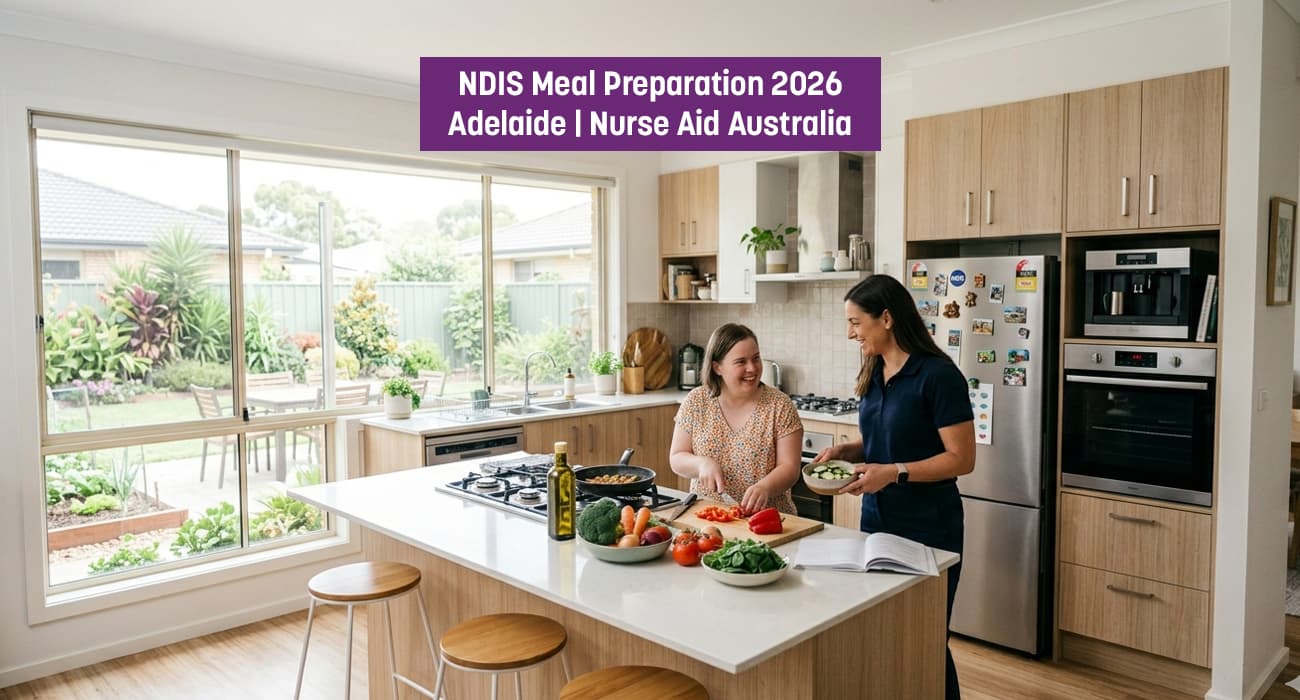
NDIS Meal Preparation Support in Adelaide: 2026 Rules Explained
What Does the NDIS Cover for Meals in 2026?
The NDIS funds the labour, preparation, and delivery of meals if you cannot cook safely due to your disability. The NDIS does not pay for groceries or ingredients.
Here’s how the 70/30 split works:
- NDIS pays 70%: Covers meal preparation, packaging, and delivery.
- You pay 30%: Covers raw ingredients and food costs.
This split applies to ready-made meal services that provide itemised invoices separating these costs.
Can I Get NDIS Funding for Meal Support?
To qualify, your meal support must meet the NDIS “reasonable and necessary” test. This means:
✓ You cannot cook safely due to your disability (not just convenience).
✓ The support helps you live independently or maintain health.
✓ The cost is fair compared to other options.
You may qualify if you:
- Cannot safely use a stove or handle knives.
- Have limited mobility or fine motor skills that make cooking dangerous.
- Cannot lift pots, carry groceries, or stand for long periods.
- Need texture-modified meals due to swallowing difficulties.
What Can the NDIS Fund for Meals?
Support Type | NDIS Funded? | |
|---|---|---|
Support worker to help cook | Yes (100%) | Assistance with Daily Life |
Ready-made meal delivery | Yes (70% only) | Assistance with Household Tasks |
Groceries and ingredients | No | You pay from personal funds |
UberEats, DoorDash, takeaway | No | Excluded under 2026 rules |
Adaptive kitchen tools | Maybe |
What the NDIS Does NOT Cover
Under the 2026 “Getting the NDIS Back on Track” reforms, these are excluded:
❌ Fast food and takeaway (UberEats, DoorDash, Menulog).
❌ Meal kit services (HelloFresh, Marley Spoon) – these are ingredient delivery, not meal
preparation.
❌ Groceries, food, or raw ingredients.
❌ High-end kitchen appliances (Thermomix, air fryers) unless they replace ongoing support
worker costs.
How to Claim NDIS Meal Support: 4 Steps
Step 1: Check Your Plan
Look for these terms in your NDIS plan under Core Supports:
- “Assistance with Daily Life”.
- “Meal preparation and delivery”.
- Support item code: 01_023_0120_1_1.
If meal support isn’t listed, you can request it at your next plan review.
Step 2: Get Evidence
You need documentation showing you cannot cook safely due to your disability:
- Functional Capacity Assessment from an Occupational Therapist.
- Letter from your GP or specialist.
- Evidence linking your disability to cooking difficulties.
Step 3: Choose a Registered Provider
Use an NDIS-registered meal provider like Nurse Aid Australia. Registered providers:
- Understand the 70/30 split billing.
- Provide itemised tax invoices that separate preparation from ingredient costs.
- Meet NDIS compliance standards.
Why this matters: Unregistered providers may not invoice correctly, which can lead to claim rejections.
Step 4: Understand the Payment Process
For Plan-Managed participants:
- Pay the 30% ingredient cost upfront when ordering.
- The provider invoices your plan manager for the 70% preparation and delivery.
For Self-Managed participants:
- Pay 100% upfront when ordering.
- Claim the 70% back using the itemised invoice.
For Agency-Managed participants:
- The provider arranges payment directly with the NDIA.
- You pay the 30% ingredient portion.
Ready-Made Meal Providers: What You Need to Know
Can I Use Lite n’ Easy or Similar Services?
Yes, if they provide itemised invoices that separate:
- Ingredient costs (30% – you pay).
- Preparation and delivery costs (70% – NDIS pays).
What About UberEats or Fast Food?
No. Fast food delivery platforms are excluded under 2026 legislation because:
- They don’t provide itemised invoices.
- They’re considered lifestyle choices, not disability supports.
NDIS Meal Support in Adelaide: How Nurse Aid Australia Helps
Nurse Aid Australia provides in-home cooking support across Adelaide, including Elizabeth, Mawson Lakes, and surrounding areas.
Our services include:
- Experienced support workers who assist with meal planning, shopping, and cooking in your home.
- NDIS-compliant invoicing that meets 2026 requirements.
- Support with developing cooking skills for long-term independence.
- Safe kitchen practices tailored to your mobility or fine motor needs.
We understand Adelaide participants face challenges maintaining a healthy diet due to physical limitations. Our team helps you stay independent while eating well.
Common Questions About NDIS Meal Support
Not always. If you have Core Supports funding, you can use it flexibly for meal preparation and delivery as long as it’s reasonable and necessary for your situation.
Ready-made meals can supplement support worker assistance. For example, use a support worker twice a week for cooking skills development, and order ready-made meals for other days.
Yes. Nutritional planning from a dietitian can be funded if it’s related to your disability and helps you maintain health.
Yes. Clinical nutrition supports, including PEG (Percutaneous Endoscopic Gastrostomy) feeds, thickeners for dysphagia, and Home Enteral Nutrition, can be funded under health-related NDIS categories.
Example: If a meal costs $14 total:
- $4.20 (30%) = You pay for ingredients.
- $9.80 (70%) = NDIS pays for preparation and delivery.
No. The NDIS does not pay for groceries, food, or raw ingredients. These are considered everyday living expenses that everyone pays for, regardless of disability. The NDIS only funds the labour involved in preparing and delivering meals if you cannot cook safely due to your disability.
The 70/30 split is how the NDIS calculates funding for ready-made meal services:
- 70% = NDIS pays for the preparation, cooking, packaging, and delivery labour.
- 30% = You pay for the raw ingredients and food value.
Example: If a meal costs $15 total:
- You pay $4.50 (30%) for ingredients.
- NDIS pays $10.50 (70%) for preparation and delivery.
This split only applies when the provider gives you an itemised invoice that clearly separates these costs.
Yes, you can use NDIS funding for Lite n’ Easy or similar ready-made meal services, but only if:
- They provide an itemised tax invoice separating preparation costs from ingredient costs.
- You pay the 30% ingredient portion from your own money.
- The service is linked to your disability needs (not just convenience).
Check with your provider before ordering to confirm they can invoice this way.
UberEats, DoorDash, Menulog, and similar food delivery platforms are excluded under the 2026 “Getting the NDIS Back on Track” legislation because:
- They deliver restaurant and fast food, not disability-specific meal preparation.
- They don’t provide itemised invoices separating preparation from ingredients.
- They’re considered lifestyle choices available to everyone.
- The NDIS cannot verify the nutritional value or appropriateness.
Yes. If you have dysphagia or other swallowing difficulties, the NDIS can fund:
- Texture-modified meal preparation (puree, minced, soft foods).
- Food thickeners prescribed by a speech pathologist.
- Specialized nutritional supplements if medically necessary.
- Support worker time to prepare safe, appropriate meals.
- Dietitian consultations to create safe eating plans.
These are considered health-related disability supports, not everyday food costs.
2026 NDIS Changes: What You Need to Know
The NDIS introduced new framework rules in 2026 that affect meal support:
- PACE Framework: Sets clinical standards for how nutritional supports are assessed and delivered
- Stated Supports: Some plans now list meal preparation as a “stated support,” meaning funds are locked to this service and cannot be used for other supports without a plan variation
- Itemised Invoicing: Providers must clearly separate preparation costs from ingredient costs on every invoice
Get NDIS Meal Support in Adelaide
If you struggle with meal preparation due to your disability, Nurse Aid Australia can help you access NDIS funding and maintain independence at home.
Contact us today to arrange reliable in-home cooking support that aligns with the 2026 NDIS Framework.